Production Delivery Phases
The development steps to reach a complete production version in 3.5 to 5 months.
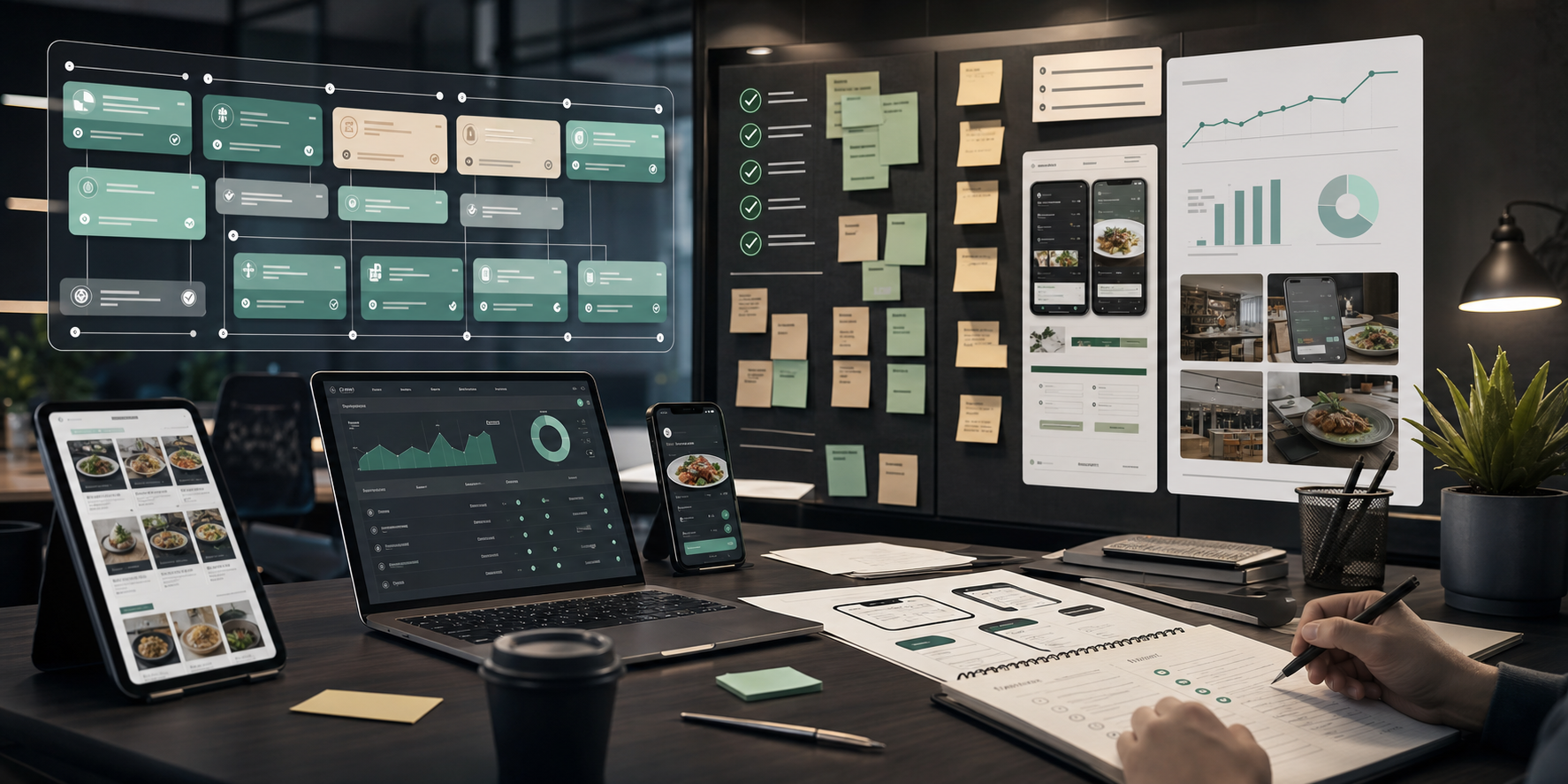
Visual direction
A production path with a fixed delivery window
The plan should move from discovery to UX, core build, payment operations, QA, pilot hardening, launch, and handover within a 14 to 20 week window.
Complete production version
14-20 weeks
5 months
Development timeline
From kickoff to production in 3.5 to 5 months.
01
Week 1-2
1-2 weeks
Discovery and production scope
Confirm the restaurant model, order modes, roles, payment provider options, hosting direction, production acceptance criteria, and exact launch boundaries.
02
Week 2-5
2-3 weeks
Product design and technical setup
Design the guest ordering flow, dashboard information architecture, kitchen/staff screens, data model, integration contracts, environments, and deployment workflow.
03
Week 5-10
4-5 weeks
Core platform build
Build the production app foundation: QR ordering, menu management, cart validation, pricing logic, tenant/branch data, dashboard modules, and realtime order status.
04
Week 9-14
3-4 weeks
Payments and operations integration
Connect the payment adapter, webhook handling, receipts, staff workflows, kitchen queue, reports, exports, storage assets, and operational notifications.
05
Week 13-17
2-3 weeks
QA, security, and pilot hardening
Run the internal testing matrix, security checks, role/tenant isolation checks, payment edge cases, performance checks, and controlled restaurant pilot feedback loop.
06
Week 16-20
2-3 weeks
Production launch and handover
Deploy production, verify monitoring and backups, train the client team, complete UAT, prepare handover documents, and move into support mode.
Production delivery assumptions
Total required period is 14 to 20 weeks, equal to roughly 3.5 to 5 months maximum from kickoff to production handover.
The schedule assumes fast access to brand assets, menu data, tax/service rules, payment provider sandbox credentials, and client review feedback.
The complete production version includes the agreed restaurant ordering, payment, operations, dashboard, reporting, QA, deployment, and handover scope.
Advanced long-term modules can still be planned, but they should not block the first production launch unless the client explicitly includes them in scope.
QA, security validation, pilot fixes, documentation, training, and UAT are included in the delivery window instead of treated as afterthoughts.